When ransomware disrupts a business, most people focus on the final stage: locked systems, downtime, and recovery work. The earlier warning signs usually receive far less attention.
The St. Paul digital security incident highlighted how quickly disruption can spread after attackers gain access to trusted accounts or internal systems. Public updates from St. Paul officials described service disruption, compromised accounts tied to a critical backup server, and later exposure of data from a Parks and Recreation network drive.
A more useful question is how attackers gain access in the first place. St. Paul’s public updates do not identify email as the confirmed entry route, so this article uses the incident as a wider lesson in operational disruption. In many ransomware cases, the starting point can still look routine. Ransomware delivered through phishing emails often begins with a compromised account, stolen credentials, or a malicious attachment.
Shared inboxes and finance approvals can create problems quickly once the wrong account gets exposed.
TrustLayer Mail gives businesses earlier visibility into suspicious email behaviour through phishing protection, impersonation detection, and malicious link and attachment scanning.
Contents
- What happened in the St. Paul ransomware incident?
- How do email threats lead to ransomware attacks?
- How can one compromised account disrupt an entire business?
- What should layered email security include for SMEs?
- What should SMEs review after a ransomware incident?
- How TrustLayer Mail helps reduce email threat risk
- Why do email threats still create major operational risk?
What happened in the St. Paul ransomware incident?
The St. Paul digital security incident disrupted city systems and interrupted some public services. Public updates from St. Paul officials said critical public safety services remained operational. Officials later said a threat actor attempted to encrypt data on compromised virtual servers, demanded a ransom, and released 43GB of data from a Parks and Recreation network drive.
Few organisations will ever operate infrastructure on that scale, but the operational pattern still feels familiar.
The disruption does not always begin with obvious ransomware screens across the network. In many cases, attackers gain access quietly through compromised credentials or trusted accounts long before internal teams realise anything is wrong.
How do email threats lead to ransomware attacks?
Email threats still remain one of the most common starting points behind ransomware disruption in businesses. And most ransomware attacks start with something that looks completely routine.
Staff already deal with password reset requests, invoice queries, supplier emails, cloud-sharing notifications, and Microsoft 365 prompts constantly throughout the working day.
By mid-morning, employees have often already processed dozens of legitimate requests across Outlook, Teams, shared inboxes, and cloud platforms. Attackers rely on that pace.
The most effective phishing emails rarely look dramatic. They look familiar.
A supplier asks somebody to review an invoice. A login prompt appears during a busy afternoon. A request arrives inside an existing email thread. Staff respond quickly because the query fits normal workflow behaviour.
That is where email threats become operationally dangerous. The account, login request, or internal email may still appear legitimate on the surface.
For businesses using Microsoft 365 and shared inboxes, the problem hardly stays contained to email alone. Internal conversations, password reset links, and approval workflows can all become exposed very quickly.
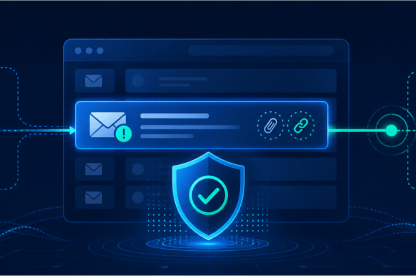
TrustLayer Mail provides earlier warning signs around phishing attempts, impersonation activity, and malicious links before attackers gain access to shared inboxes, approvals, or connected systems.
Phishing emails often succeed because they resemble requests staff already deal with every day, such as supplier invoices or account verification prompts. That remains one of the clearest examples of how phishing enables ransomware infections inside busy organisations. This is a general email-threat lesson, not a confirmed description of how the St. Paul incident began.
How can one compromised account disrupt an entire business?
Plenty of organisations rely on email approvals and shared systems to keep work moving.
Once attackers compromise a trusted account, they usually avoid anything noisy at first. They read internal conversations, access shared inboxes, and work through systems using accounts that staff already trust.
Some organisations only notice the issue after inbox rules change unexpectedly or suspicious internal emails start circulating internally.
In practical terms, one compromised account can create:
- disruption to shared inbox access
- interrupted supplier communication
- emergency password resets across teams
- suspicious account lockouts
- temporary loss of cloud system access
- delays responding to customers or internal requests
Businesses without dedicated internal security teams often spend valuable time simply trying to work out what caused the disruption in the first place.
Most organisations do not think about how connected these systems are until recovery starts happening everywhere at once.
Want to understand how exposed your email environment may be?
It is easy to underestimate how quickly email threats can spread once attackers gain access to a trusted account.
TrustLayer gives SMEs a clearer view of email threat exposure through TrustLayer Mail, combining phishing protection with stronger visibility into account activity across shared inboxes and connected cloud systems.
Some organisations only discover risky permissions or compromised accounts after disruption has already started. By that stage, internal staff often deal with inaccessible inboxes, supplier confusion, and recovery work all at once.
Reviewing those weaknesses earlier often reduces downtime and gives teams a clearer response path before operational problems spread further.
What should layered email security include for SMEs?
Strong email security involves much more than blocking spam.
Email attacks usually succeed after several smaller gaps line up at the same time.
Weak passwords and missing MFA controls often create enough room for attackers to access systems without drawing attention immediately.
Many of these controls now form part of standard email threat prevention best practices for businesses managing Microsoft 365, shared inboxes, and cloud platforms.
For SMEs, layered email security often includes:
- email filtering and anti-phishing protection
- MFA across email and cloud platforms
- suspicious login monitoring
- attachment and link scanning
- phishing awareness training
- shared inbox access reviews
- clear internal reporting processes
- account access monitoring
Each layer reduces risk differently.
MFA helps limit damage if attackers steal credentials through phishing. Email filtering reduces the likelihood of malicious messages reaching employees in the first place.
Security staff also need a clearer view of login behaviour that does not fit normal usage patterns because suspicious activity often blends into normal traffic early on.
TrustLayer allows businesses to review how those controls work together across email systems, cloud platforms, and shared workflows.
Problems often appear in the gaps between systems rather than inside one tool.
What should SMEs review after a ransomware incident?
The St. Paul incident provides a useful reminder to review how email systems, cloud platforms, and account access operate across the wider business.
Businesses should consider:
- reviewing who can access shared inboxes and sensitive systems
- removing inactive accounts or unnecessary permissions
- strengthening authentication across email platforms
- reviewing email security controls and filtering policies
- checking for password reuse across business systems
- reinforcing phishing awareness through ongoing training
- reviewing how suspicious emails get reported internally
- monitoring unusual login behaviour more closely
- reviewing backup and recovery processes
A lot of organisations already use some of these controls individually. The bigger issue usually appears once staff realise those protections do not communicate cleanly across the wider environment.
How TrustLayer Mail helps reduce email threat risk
TrustLayer approaches email threats from an operational perspective by focusing on how attackers behave inside real email environments after gaining access to a trusted account.
Many businesses already use spam filtering or MFA individually. Problems usually start after attackers bypass one layer and begin operating through accounts that staff already trust.
TrustLayer Mail improves visibility around phishing attempts, impersonation activity, and malicious links before those problems spread into shared inboxes, finance approvals, or connected systems.
Organisations can also see how suspicious email activity links to wider cloud access and internal workflows. That matters because internal disruption usually accelerates once attackers gain access to password resets, approvals, or supplier communication.
TrustLayer works with businesses to review those risks in practical terms so organisations can strengthen protection without adding unnecessary complexity.
Why do email threats still create major operational risk?
Businesses often focus on ransomware itself while overlooking the email threats that create the initial access point.
The St. Paul incident reinforced a practical reality for businesses: serious disruption often starts long before ransomware appears on screen.
A phishing email or compromised credential may look minor at first. The real damage usually appears later once internal systems, approvals, inboxes, or supplier communication become affected.
Layered email security still plays a major role in protecting small businesses from email-based ransomware. Email filtering, MFA, behaviour monitoring, and stronger reporting processes all help organisations spot problems earlier and respond before disruption spreads further.
If your organisation wants to review where email threats could create operational disruption across shared inboxes, cloud systems, or customer communication, book a demo with TrustLayer to explore practical layered security approaches designed for real SME environments.